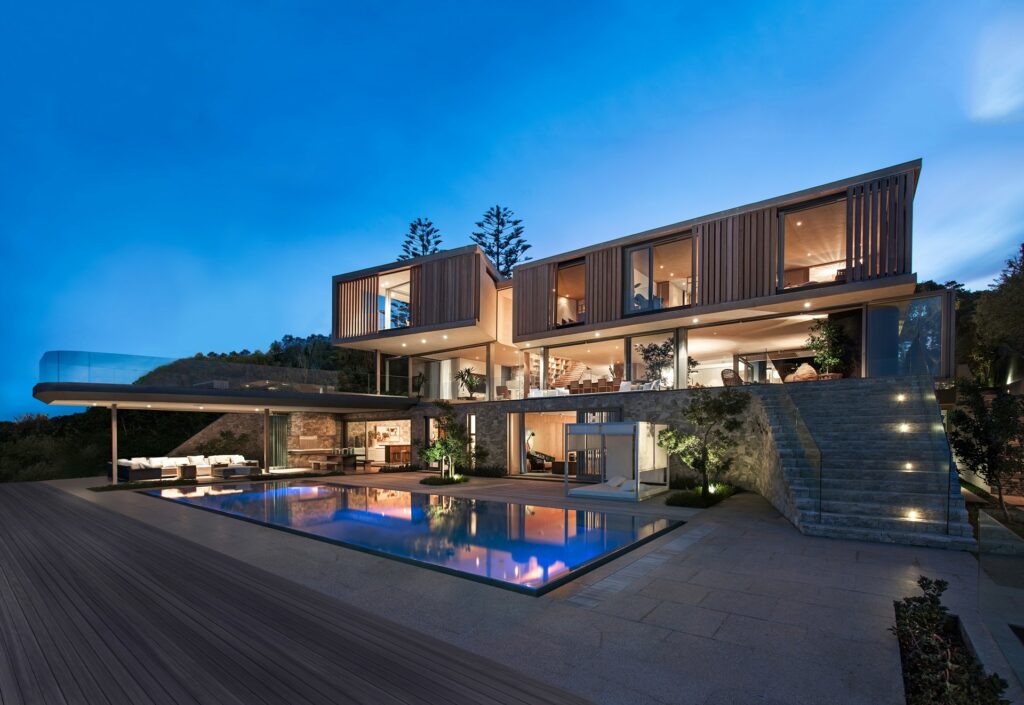
Marcus Chen sits in his Manhattan penthouse overlooking Central Park, gesturing toward a hand-inlaid walnut credenza that took six months to complete. The surface displays an abstract pattern inspired by his grandmother’s textile designs from 1960s Hong Kong, with each piece of rare burl wood selected and positioned by artisans over 240 hours of labor. This is not a showroom decoration. This is Marcus as co-designer, working alongside craftspeople from premier Italian furniture company Modenese Furniture to transform memory into material form.
The scene represents a fundamental shift in how individuals with substantial assets approach residential design. Between 2023 and 2024, the global population of high-net-worth individuals grew from approximately 22.8 million to 23.4 million, with their combined wealth increasing by 4.2% :antCitation[]{citations=”800d4746-b6f4-4414-9ceb-a76918932cf1,8a0cb368-da10-446f-8014-bc063cb621a3″}. Within this expansion lies a more specific transformation: these individuals increasingly reject ready-made solutions in favor of collaborative creation.
The Numbers Behind Personal Expression
American homeowners spent approximately $827 billion on home improvement projects during the two-year period ending in 2023, according to data from the U.S. Census Bureau’s American Housing Survey: an increase of more than $200 billion compared to the previous measurement period. While aggregate spending captures everything from basic repairs to major renovations, interviews with design professionals and their clients reveal that individuals at the higher end of the wealth spectrum allocate disproportionate resources toward personalization rather than standardization.
The global customized furniture market reached $35.3 billion in 2024 and is projected to reach $98.27 billion by 2033, representing a compound annual growth rate of 12.05%. These figures reflect structural changes in consumer behavior rather than cyclical trends.
| Market Segment | 2024 Value | 2033 Projection | Growth Rate |
|---|---|---|---|
| Global Customized Furniture | $35.30 billion | $98.27 billion | 12.05% CAGR |
| U.S. Home Improvements (2-year period) | $827 billion | Data pending | 33% increase vs. prior period |
| Professional vs. DIY Projects | 64% professional | Trending upward | Shift from 2021 baseline |
Sarah Martinez: From Purchaser to Partner
Sarah Martinez built her wealth through pharmaceutical patents. Her Boston townhouse, completed in 2023, involved 14 months of active collaboration with furniture makers, colorists, and wood specialists. She maintains detailed documentation of the process.
“I rejected 11 samples before we found the correct shade of sage for the library panels,” Sarah explains. “Not sage green—sage the herb, harvested in late summer, dried for three weeks. We eventually matched it using a combination of milk paint and natural pigments mixed on-site. The artisan kept samples from my garden in his workshop.”
Her approach reflects patterns observed across interviews with individuals who manage substantial assets. Rather than selecting from predetermined options, they engage in what one design historian describes as “authorship through specification.” Sarah’s dining table involved:
- 8 video consultations with the wood specialist over 4 months
- Physical samples of 23 different grain patterns from sustainable forestry sources
- 3 full-scale mockups in different wood species before final selection
- Custom finishing process developed specifically for her humidity and light conditions
- Documentation protocol ensuring the finish could be maintained or restored decades later
The final cost reached $47,000 for a table seating 12. Comparable mass-produced tables from luxury retailers range from $8,000 to $15,000. Sarah considers the premium worthwhile: “I’m not buying a table. I’m creating a table to hold specific conversations with specific people. The cost reflects the specificity.”
The Mechanics of Wood Inlay Collaboration
Daniel Okonkwo, a master craftsman who has completed projects for clients across three continents, describes the technical evolution in custom wood inlay work. His studio in Vermont has tracked detailed metrics on client involvement over the past decade.
“In 2014, maybe 30% of clients wanted input beyond basic design approval,” Daniel notes. “By 2024, that figure reached 78%. More significantly, the depth of involvement changed. Clients now commonly request:
- Participation in wood selection at the lumber yard or forest certification site
- Approval of individual veneer pieces before cutting
- Iteration on patterns through physical samples rather than renderings
- Documentation of the entire process, including tool marks and joining techniques
- Provisions for future modification or expansion of inlay patterns
Daniel’s most complex recent commission involved a library wall for a technology executive. The client requested inlay work depicting the evolution of a specific algorithm across 40 years. The project required:
| Phase | Duration | Client Interactions | Iterations |
|---|---|---|---|
| Concept Development | 6 weeks | 12 meetings | 7 major revisions |
| Wood Selection | 4 weeks | 2 site visits | 23 sample reviews |
| Pattern Mockups | 8 weeks | Weekly reviews | 4 full-scale versions |
| Fabrication | 16 weeks | Bi-weekly check-ins | 3 mid-process adjustments |
| Installation & Finishing | 3 weeks | Daily consultation | On-site refinements |
Total project cost reached $340,000. The client maintains detailed archives of every decision point, treating the documentation as equal in value to the physical outcome.
Color as Autobiographical Element
Priya Desai worked with a color consultant for 11 months before finalizing the palette for her Chicago residence. The process involved chromatography analysis of fabrics, paint, and natural materials from five generations of family history.
“My great-grandmother wore a specific shade of coral silk to her wedding in 1932,” Priya recounts. “We located vintage fabric samples from that era, analyzed the dye composition, then worked with a natural pigment specialist to recreate it using modern lightfast materials. That color now appears in seven different applications throughout the house—silk wallcovering in the entry, leather on the dining chairs, a custom plaster finish in the powder room.”
The color consultant, Rebecca Ling, has observed this pattern intensifying among clients. Her firm now maintains a database of over 4,000 custom color formulations, each linked to specific client narratives. According to the Census Bureau construction spending data, investments in personalized finishes are a growing category within overall improvement expenditures.
“Fifteen years ago, a client might request ‘something like Farrow & Ball’s Hague Blue,'” Rebecca explains. “Now they arrive with oxidized copper samples from a family business, asking us to capture that specific patina at a specific point in the aging process. Or they bring soil from a meaningful location and want that exact earth tone. We’re not selecting colors anymore. We’re encoding memory.”
The Artisan Drop Model
James Wu pioneered what he terms “artisan drops”—limited collaborations between a single craftsperson and a small group of clients who co-create a furniture series over an extended period. His model emerged from observing patterns in luxury goods markets.
“In 2019, I noticed clients expressing frustration with both mass customization and traditional bespoke services,” James recalls. “Mass customization offered too little genuine input. Traditional bespoke meant working in isolation with one artisan. The artisan drop model creates a middle path.”
The structure works as follows:
- An artisan announces an upcoming “drop”—typically a series of 6-12 related pieces
- Interested clients submit applications describing their vision for how the work might fit their lives
- The artisan selects 3-5 clients to form a temporary collaborative group
- The group meets monthly for 6-18 months, developing designs together
- Each client receives a unique piece from the series, with variation driven by the collaborative process
- Documentation of the entire process becomes part of the delivered work
James’s first drop in 2020 involved a Copenhagen furniture maker specializing in carved seating. Five clients participated over 14 months. Each paid between $65,000 and $110,000, depending on final specifications. The model has since expanded to include artisans working in metal, glass, textile, and mixed media.
“Clients value two elements equally,” James notes. “First, the collaborative process itself—the learning, the creative problem-solving, the relationship with the artisan. Second, the knowledge that their piece exists within a small constellation of related objects, each distinct but connected through shared authorship.”
Investment Patterns and Time Horizons
Financial advisors who work with individuals pursuing extensive customization report distinct patterns in how these clients approach spending on co-created design. The data reveal attitudes toward value that differ from those in traditional luxury-goods purchases.
According to Capgemini’s World Wealth Report 2024, which surveyed over 3,100 high-net-worth individuals, asset allocation patterns show an increasing interest in what researchers term “experience investments”—expenditures that generate both tangible assets and meaningful engagement.
| Investment Category | Traditional Luxury Purchase | Co-Created Design Project |
|---|---|---|
| Average Project Cost | $15,000-$75,000 | $45,000-$350,000 |
| Time from Decision to Completion | 2-12 weeks | 6-24 months |
| Client Hours Invested | 5-20 hours | 80-400 hours |
| Expected Ownership Duration | 5-15 years | Generational (50+ years) |
| Documentation Provided | Provenance certificate | Complete creation archive |
Elena Petrov, a wealth advisor in San Francisco, works with clients who have collectively invested over $180 million in custom residential projects during the past five years. She identifies several consistent patterns:
“First, these clients view the time investment as central to the value proposition, not as a cost to be minimized. One client told me that the 300 hours he spent collaborating with a furniture maker taught him more about design thinking than his MBA did about business strategy. Second, they explicitly reject depreciation models. They expect these pieces to appreciate in personal meaning over time, even if market value becomes irrelevant. Third, they structure these expenditures as educational investments for their children—the process matters as much as the product.”
Technical Specifications and Material Choices
Robert Hayes manages procurement for a collective of artisans serving clients across North America. His organization tracks detailed specifications from hundreds of completed projects. The data reveals how co-creation influences material selection.
“In mass production, material choice optimizes for cost, availability, and predictable performance,” Robert explains. “In co-created work, materials become narrative elements. Clients routinely request woods, metals, or stones connected to specific places or events in their lives.”
Recent project specifications from Robert’s database include:
- Walnut from a tree that grew on the client’s childhood property, felled during estate settlement, dried for 7 years before use
- Brass sourced from a decommissioned ship, the client’s grandfather served on during military service
- Marble from a specific Italian quarry visited during the client’s honeymoon, with veining patterns matched to photographs from that trip
- Linen woven on equipment dating to 1890, using flax grown in a specific region matching the client’s heritage
- Steel reclaimed from a demolished building where the client’s company was founded
These material requirements significantly extend project timelines. Industry data indicates that customization requires lead times averaging 6-8 weeks for standard projects :antCitation[]{citations=”ea968f35-06d7-4ea5-bd61-8da152116290″}, but narrative-driven material sourcing can extend this to 12-36 months.
“One current project involves leather tanned using a method documented in an 18th-century treatise the client discovered in a university archive,” Robert notes. “We located a tannery in France willing to attempt the historical process. It took 14 months to produce enough usable material for a set of dining chairs. The client considers the research and experimentation integral to the value of the finished work.”
The Documentation Imperative
Clients pursuing co-created design increasingly demand comprehensive documentation of the creation process. This extends beyond traditional provenance records to include video, photography, material samples, tool marks, and correspondence.
Catherine Zhou runs a specialized service providing archival documentation for custom furniture projects. Her team has recorded over 200 projects since 2018, with demand accelerating annually.
“Clients now commonly request multi-camera video documentation of the entire fabrication process,” Catherine explains. “Not highlight reels—complete records showing every step, including mistakes and corrections. They want material samples preserved from each phase. They want the artisan’s working sketches and notes. Many request that certain tool marks be preserved in the final piece as evidence of the handwork.”
Her most extensive documentation project involved a bedroom suite that took 22 months to complete. The delivered archive included:
- 187 hours of time-lapse video covering all fabrication stages
- 2,400 still photographs documenting key decisions and techniques
- Physical samples of 67 different materials were considered during the process
- Complete correspondence between client and artisan (340 emails, 89 text exchanges)
- Hand-drawn sketches from 15 design iteration sessions
- Audio interviews with the three artisans involved, discussing their approach and problem-solving
The documentation package cost $34,000, in addition to the furniture, which totaled $280,000. The client views this as essential: “Fifty years from now, my children won’t just inherit furniture. They’ll inherit the story of its creation, told through primary sources they can explore.”
Economic Impact and Artisan Networks
The shift toward co-created design has economic implications extending beyond individual transactions. Artisan networks report changing business models, skill development patterns, and geographic distribution.
According to analysis from economic development agencies tracking skilled trades, demand for craftspeople with advanced customization capabilities has grown faster than supply. This creates upward pressure on pricing while simultaneously attracting new entrants to traditional craft fields.
Maria Gonzalez coordinates a network of 47 independent artisans across the southwestern United States. She tracks detailed metrics on project types, pricing, and skill development.
“In 2019, our average project involved maybe 20 hours of direct client interaction,” Maria reports. “By 2024, that figure reached 85 hours. This fundamentally changes the economics. Artisans must develop communication skills, design thinking, and project management beyond their core craft expertise. But it also changes the satisfaction level. Nearly every artisan in our network reports higher job satisfaction when working on collaborative projects compared to executing predetermined designs.”
Her network has documented the following patterns:
| Metric | 2019 Baseline | 2024 Current | Change |
|---|---|---|---|
| Average Project Value | $28,000 | $67,000 | +139% |
| Client Contact Hours per Project | 20 hours | 85 hours | +325% |
| Project Duration (median) | 10 weeks | 26 weeks | +160% |
| Design Iterations per Project | 3 | 8 | +167% |
| Repeat Client Rate | 23% | 61% | +165% |
Regional Variations and Cultural Context
While co-creation patterns appear across geographies, regional variations reflect different cultural attitudes toward collaboration, craft, and material meaning.
David Park conducts comparative research on luxury consumption patterns across North America, Europe, and Asia. His data reveals distinct regional preferences in how clients approach collaborative design.
“In North American markets, clients often emphasize the innovative aspects of collaboration—using the process to create something previously unimaginable,” David observes. “European clients more frequently reference historical precedent, seeking to recreate or reinterpret traditional techniques with personal modifications. Asian clients, particularly in markets like Singapore and Hong Kong, often focus on intergenerational meaning – creating pieces explicitly designed to be passed down with embedded family narratives.”
His research documents spending patterns across regions:
| Region | Avg. Custom Project Value | Preferred Materials | Typical Timeline |
|---|---|---|---|
| North America | $52,000 | Domestic hardwoods, reclaimed metals | 8-14 months |
| Western Europe | $71,000 | Traditional European woods, stone | 10-18 months |
| Asia-Pacific | $89,000 | Exotic hardwoods, precious metals, jade | 12-24 months |
| Middle East | $103,000 | Marble, brass, mother-of-pearl inlay | 14-28 months |
Technical Training and Skill Transmission
The growing demand for collaborative customization has prompted the development of new training programs bridging traditional craft skills and contemporary design thinking.
The Rhode Island School of Design launched a specialized program in 2021 focused on collaborative furniture making. Program director Jennifer Liu describes the curriculum as addressing skills that traditional craft training often overlooks.
“Technical mastery remains essential – you cannot collaborate effectively on custom joinery if you lack fundamental woodworking skills,” Jennifer notes. “But we’ve added substantial coursework in client communication, iterative design processes, documentation methods, and what we call ‘narrative listening’ – the ability to understand what a client means beyond what they initially articulate.”
Students complete 18-month projects under supervision, working with actual clients. Recent projects have included a rocking chair made from wood from a client’s family farm, a desk with hidden compartments reflecting the client’s career in cryptography, and a cabinet system using materials sourced from the seven countries the client lived in during childhood.
According to the U.S. Census Bureau tracking of construction and improvement industries, educational institutions report increasing enrollment in craft-based programs after years of decline, with particular growth in programs emphasizing customization and client collaboration.
Future Directions and Emerging Patterns
Industry observers identify several developing patterns likely to shape co-created design over the next decade.
Technology integration represents one significant trend. While collaborative customization emphasizes handwork and traditional techniques, clients increasingly request the incorporation of contemporary capabilities. Recent projects have included furniture with embedded sensors monitoring environmental conditions, pieces designed to interface with home automation systems, and works incorporating LED systems programmed to respond to specific triggers meaningful to the client.
Multi-generational planning appears more frequently in project specifications. Clients now commonly request that pieces be designed for modification or expansion by future generations—furniture that can be added to, refinished with different narratives, or reconfigured as family circumstances change.
Thomas Anderson studies wealth transfer patterns and their influence on consumption behavior. His research reveals that individuals preparing for eventual wealth transfer to younger generations increasingly view co-created design projects as educational experiences for heirs.
“Parents bring adult children into collaborative furniture projects as a form of legacy preparation,” Thomas explains. “They’re teaching design thinking, patient craftsmanship, the value of process, and the importance of material meaning. One family I studied commissioned a dining table with their three adult children. Each child worked with the artisan to design one element of the piece. The parents view this as preparation for managing the family’s broader assets and values.”
Cost Structures and Value Perception
Understanding how clients perceive value in co-created design requires examining cost structures distinct from those of traditional luxury goods or standard custom work.
Linda Hoffman advises clients on residential design investments. She has developed frameworks for evaluating co-creation projects that account for both tangible and experiential value.
“A mass-produced luxury sofa might cost $12,000,” Linda explains. “A standard custom sofa to your specifications might cost $25,000. A fully co-created piece where you work with the maker over eight months, selecting every material, influencing every design decision, and receiving complete documentation might cost $65,000. Traditional ROI analysis sees that as poor value. But clients pursuing co-creation use different metrics.”
She identifies value components her clients consistently cite:
- Educational value from the collaborative learning process
- Relationship value from working closely with a master craftsperson
- Creative satisfaction from participating in actual design decisions
- Narrative value from embedding personal meaning in material form
- Legacy value from creating documented heirloom pieces
- Intellectual property value from co-creating unique designs
“When you account for these elements, many clients believe co-created pieces offer better value than either mass-produced luxury goods or standard custom work,” Linda notes. “The process itself delivers value beyond the physical object.”
Material Science and Innovation
Collaborative customization drives innovation in materials science as clients request capabilities not available in standard offerings.
Dr. Raymond Torres works with a materials science lab that consults on custom furniture projects requiring novel technical solutions. Recent projects have included:
- Wood stabilization techniques allow the use of spalted or partially decayed wood that would normally be too fragile for furniture applications
- Custom resin formulations that preserve botanical materials while maintaining structural properties
- Metal alloy development, creating specific color and patina characteristics requested by clients
- Textile treatments combining historical dyeing methods with modern lightfastness requirements
- Stone reinforcement allows the use of rare, fragile materials in functional applications
“Client-driven innovation differs from manufacturer-driven innovation,” Dr. Torres explains. “Manufacturers optimize for scalability and cost. Clients pursuing co-creation often request one-off solutions to specific problems—making a particular material work in a particular application for a particular reason. This generates innovations that later find broader applications, but the initial driver is individual need rather than market demand.”
The Role of Narrative Architecture
Design professionals who facilitate co-creation increasingly describe their role as “narrative architects” – helping clients identify meaningful stories and translate them into material specifications.
Alexandra Kim specializes in this facilitation work. She conducts multi-session interviews with clients before they engage with artisans, helping them clarify the narratives they want to embed in their spaces.
“Clients often begin with vague desires for ‘something meaningful’ or ‘pieces that tell my story,'” Alexandra explains. “My role involves structured exploration. We examine family history, significant locations, important relationships, pivotal experiences, cultural heritage, and aspirational values. From this emerges a coherent narrative framework that guides material selection, design choices, and collaborative processes.”
Her typical engagement involves 8-12 sessions over 3-4 months, followed by the client beginning to work directly with artisans. Clients pay between $15,000 and $40,000 for this narrative development work.
Recent narrative frameworks she has developed include:
- A “geography of influence” concept mapping materials to places that shaped the client’s worldview
- A “generational transmission” framework incorporating materials and techniques from both ancestral traditions and contemporary innovations
- A “professional evolution” narrative where furniture elements represent different phases of the client’s career
- A “relationship constellation” approach using materials connected to important people in the client’s life
“The narrative framework becomes a design brief that artisans can work from,” Alexandra notes. “But unlike a traditional brief specifying functional requirements and aesthetic preferences, this provides meaning-based guidance that shapes every aspect of the collaborative process.”
Economic Accessibility and Future Demographics
While current co-creation patterns concentrate among individuals with substantial assets, industry observers note emerging models that may expand access.
Demographic analysis shows that younger high-net-worth individuals, particularly millennials and Gen Z, demonstrate different spending patterns than older cohorts. These younger individuals more frequently prioritize experience-based investments and collaborative processes, even when working with smaller budgets than established wealth holders.
Marcus Williams runs a startup developing what he calls “scaled co-creation” – business models that enable broader participation in collaborative design processes.
“The extreme version – $200,000 custom pieces with 18-month collaborative timelines – will always serve a limited market,” Marcus observes. “But elements of the co-creation model can scale. We’re testing approaches where multiple clients collaborate on related pieces from a single artisan, where technology enables remote participation in fabrication processes, and where modular systems allow meaningful customization within more constrained budgets.”
His platform has completed 340 projects since launching in 2022, with average project values ranging from $8,000 to $25,000 – substantially below traditional custom furniture pricing but significantly above mass-market pricing. Client satisfaction metrics show patterns similar to higher-end co-creation projects.
“Clients consistently report that the collaborative process matters more than the scale of the investment,” Marcus notes. “A $12,000 project where they genuinely participate in design decisions delivers more satisfaction than a $40,000 piece ordered from a catalog of custom options. The key seems to be an authentic creative partnership rather than a dollar amount.”
Maintenance and Long-term Relationships
Co-created furniture fosters ongoing relationships between clients and artisans, extending beyond the initial completion. This differs substantially from typical transactions involving luxury goods.
Robert Klein has maintained his furniture-making practice for 34 years. He tracks relationships with clients who commissioned pieces decades earlier.
“Of the 127 major projects I’ve completed since 1990, I remain in regular contact with 91 of those clients,” Robert reports. “They reach out about maintenance, discuss refinishing as pieces age, request repairs when accidents occur, and increasingly ask about creating complementary pieces or modifying original work. Several clients have commissioned pieces for their children, creating three-generation relationships.”
This ongoing engagement influences how artisans approach initial construction. Robert now standardly incorporates design elements facilitating future modification:
- Joinery techniques allowing partial disassembly without damage
- Material specifications are documented in detail for future matching
- Modular elements that can be replaced or upgraded independently
- Finish protocols that permit refinishing multiple times over decades
- Structural reinforcement allowing future weight or use modifications
“When you build a piece knowing you’ll be working on it again in 10 or 20 years, you make different construction decisions,” Robert explains. “You think about how wood will age, how joinery will wear, how the client’s needs might evolve. You’re not building furniture. You’re starting a relationship that happens to involve furniture.”
The shift toward co-created design represents more than aesthetic preference or status signaling. Interviews across diverse participants reveal a fundamental reconsideration of how individuals with resources approach the material environment of daily life. They seek not possessions but collaborations, not products but processes, not decoration but documentation of meaning made tangible through patient work.